Claude Meetings Explained: Claude Joins Your Google Meet Calls
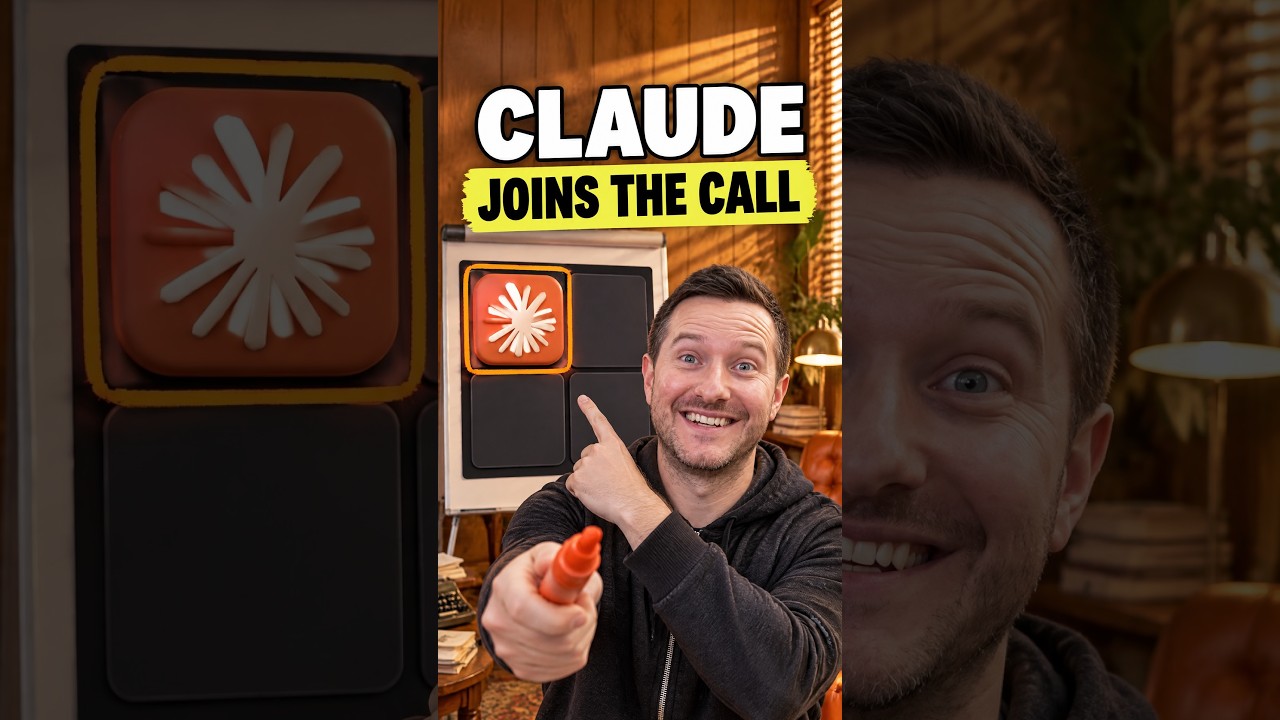
Prefer to watch? Watch on YouTube · Subscribe for new builds · Read the transcript
In this video I cover Claude Meetings, a new feature Anthropic just launched that lets you add Claude to your video call. It's a short video for anyone who works on a team and spends a lot of the week in meetings. I walk through what Claude does during the call, what is waiting for you after you hang up, and the one catch to sort out before you add it.
What I cover in this video
- 0:00 The person in every meeting who grabs the marker and turns the talking into a plan, and how Claude can now be that person inside your video call.
- 0:00 What Anthropic launched: Claude Meetings, in beta, rolling out on Team and Enterprise, starting with Google Meet.
- 0:00 An example call where you're planning a customer event and someone asks Claude to start a doc.
- 0:00 Asking Claude what last year's event cost, and what ends up on the meeting's page when you hang up.
- 0:46 The one catch: making sure everyone is OK with being transcribed.
- 0:46 The question I leave you with: would you hand Claude the marker?
What Claude Meetings is
Every meeting has that one person who grabs the marker and turns the talking into a plan. Claude can now be that person inside your video call.
Anthropic just launched Claude Meetings. It's in beta and rolling out on Team and Enterprise plans, starting with Google Meet. You add Claude to your Google Meet call and it works alongside the people in the meeting.
I want to be clear about one thing up front. Claude does leave you notes, but the notes are the least interesting part. What stands out to me is that Claude builds things while you're still talking. If the idea of AI doing work for you is new, my AI Agents page is a good place to start.
What Claude does during the call
In the video I use the example of planning a customer event. You're on the call with your team, talking through the plan, and someone says:
Claude, start a doc.
Claude writes up what you've said so far. Your teammates can edit that doc while you keep talking, so the plan takes shape during the conversation.
Then someone asks what last year's event cost. Claude asks to look it up, then posts the answer in the chat. The question gets answered while everyone is still on the call.
Along with the doc, Claude builds the whiteboard while you're still talking. That's the marker idea from the start of the video. Someone has to turn the talking into something the team can look at and use, and now Claude can take that job.
To me, this is the real change: the work starts before the meeting ends. A meeting is normally where you talk about the work. With Claude on the call, some of that work is already underway by the time everyone hangs up.
What you get when the call ends
When you hang up, the notes, action items, and that doc are already on the meeting's page. Everything Claude made during the call ends up on one page, so there is one place to go back to.
For a team, this means nobody leaves owing the writeup. The notes and action items are already there, next to the doc you built together during the call.
The one catch: transcription
There is one catch I call out in the video. Make sure everyone on the call is OK with being transcribed. Check with the people in the meeting before you add Claude, so nobody is surprised by it.
Keep in mind that Claude Meetings is still in beta. It's rolling out on Team and Enterprise plans, and it's starting with Google Meet.
I end the video with a question for you. Would you hand Claude the marker in your next meeting?
Key takeaways
- Claude Meetings puts Claude inside your video call. Anthropic launched it in beta, rolling out on Team and Enterprise plans, starting with Google Meet.
- The notes are the least interesting part. Claude builds the doc and the whiteboard while you're still talking, and teammates can edit the doc during the call.
- You can ask it questions during the meeting. In my example, someone asks what last year's event cost. Claude asks to look it up, then posts the answer in the chat.
- Everything lands on one page. When you hang up, the notes, action items, and the doc are already on the meeting's page, so nobody leaves owing the writeup.
- Get everyone's OK first. Make sure everyone on the call is fine with being transcribed.
FAQ
What is Claude Meetings?
Claude Meetings is a feature Anthropic just launched that lets you add Claude to your video call. Claude builds the doc and the whiteboard while you're still talking, then leaves the notes, action items, and everything it made on one page.
Does Claude Meetings work with Google Meet?
Yes. Claude Meetings is starting with Google Meet, so you add Claude to your Google Meet call.
Who can use Claude Meetings right now?
Claude Meetings is in beta and rolling out on Team and Enterprise plans.
Does Claude Meetings transcribe the call?
Yes, the call is transcribed, so make sure everyone on the call is OK with that before you add Claude.
Transcript
Read the full transcript
0:00Every meeting has that one person who grabs the marker and turns the talking into a plan. Now Claude can be that person inside your video call. And it doesn't just take [music] notes. Anthropic just launched Claude meetings rolling out in beta on Team and Enterprise starting with Google Meet. So picture your next call. You're planning a customer event. Someone says, "Claude, start a doc." It writes up what you've said and teammates edit it while you talk. [music] Ask what last year's event cost. Claude asks to look it up, then post the answer in the chat. That's the real [music] change. The work starts before the meeting ends. When you hang up, the notes, action items, and that doc are already on the meeting's [music] page. For a team, nobody leaves owing the writeup. One catch, make sure
0:46everyone's okay with being transcribed. [music] So, would you hand Claude the marker? Comment guide and I'll send you the free setup guide.
Ready to start building with AI?
Join the Shipping Skool community free. Paid members get live bootcamp calls every week and weekly-updated courses.
Join Shipping SkoolKeep reading
Anthropic S-1 Explained: $16.3B Revenue and the $80.7B Loss
Anthropic's S-1 shows $16.3B in revenue and an $80.7B net loss for the first half of 2026. About $72.4B of that loss is a paper charge on Amazon's convertible notes. The operating loss was only $693M, and cash from operations was positive. For Claude Code users, the main things to watch are rate limits and pricing.
Claude Fable 5.2 Explained: Pricing, Benchmarks, and Effort Levels
Anthropic's Claude Fable 5.2 costs $8 in and $40 out per million tokens, down from $10 and $50. At High effort it roughly matches Opus 5.5 at Max on FrontierCode for about half the cost per task. I'm keeping Opus 5.5 as my daily driver and using Fable for big, hard projects.
Harness² Explained: Google's Self-Improving AI Agent Harness
Harness² from Google Cloud AI Research and Northwestern improves AI agents by rewriting the prompts, memory, skills, tools and plugins around a model. The weights stay the same. In the researchers' tests, GLM-5 gained 11.5 points on an office and coding benchmark, and you can run a manual version of the same loop in Claude Code.