Solving OpenClaw Memory Issues with Mem Palace
By Beau Johnson · · 13 min · 5.9K views
Chapters
- 0:00The hook: Milla Jovovich built an AI memory tool
- 0:40What is MemPalace and why is it blowing up
- 1:05The real problem with AI memory (your agent forgets everything)
- 2:00Why LangChain, mem0, and Zep have a hidden flaw
- 3:30How MemPalace stores memory differently, verbatim storage explained
- 4:30The benchmark: 96.6% with zero API calls and no cloud
- 5:30The "100% claim" and why it is not fully clean
- 6:30Who is Milla Jovovich on GitHub, is this real
- 7:30How to actually use MemPalace today (MCP and CLI setup)
- 9:00Best use cases for builders and AI agents
- 9:45Honest downsides and what is missing
- 10:30What this signals for AI memory in 2026
- 11:00My recommendation
About this video
Transcript
Read the full transcript
0:00The biggest problem with Openclaw has been memory. From day one, figuring out the memory issue for me has been a non-stop persistent issue. I have four ways I back up my memory, and there's new GitHub repos coming out every day that helps solve this memory issue. Well, in this video, we're going to be going over an interesting GitHub repo I have linked down below that is absolutely free, and it's going to solve all your memory issues. So, Milla Jovovich, I'm sure you didn't expect me to say that name. Yes, the lady who played in Resident Evil, that lady, the actress, the one who spent like, you know, four movies shooting zombies in the face. Uh, she just co-created one of the most talked about AI tools this month. Has over 11,000 stars on GitHub,
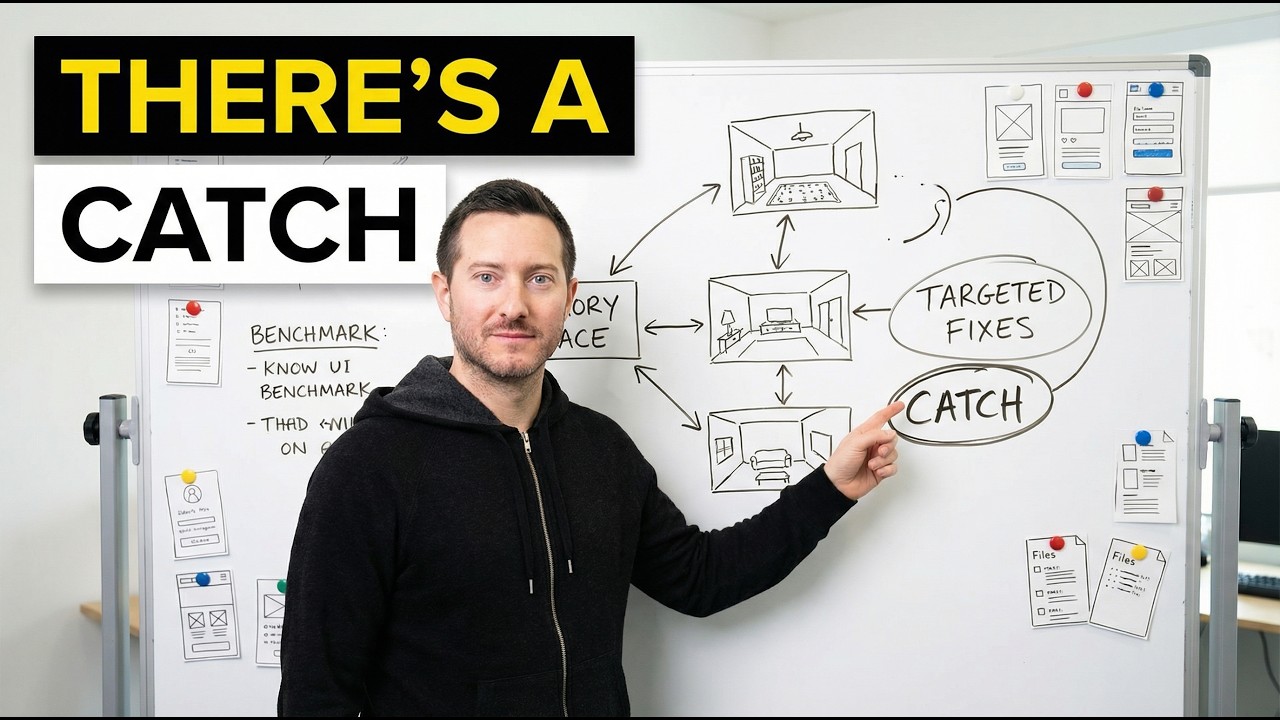
0:46and it scored 100% on the benchmark for memory. Here's the catch, though. There is one, I'll get to it later. I'm going to explain the catch because nobody else is talking about it. There's more to it. The tool is called Mem Palace. It hit GitHub 2 weeks ago and has, like I said, around 11,000 stars. That's not slow growth by any means. That's the kind of traction that means people are actually paying attention. But when I dug into why, it made a lot of sense. Here's the problem it solves. You know, if you've never used an AI agent for more than three conversations, you've probably noticed it forgets things, like completely. It's one of the most annoying things about creating AI agents. You get things set up, you get pipelines going, and then the next day it says, "Hey, who are you? How are you doing?" It's really discouraging. So, you basically can tell it your project
1:31setup, you can tell it your business model, you told it your preferences, and then you start a new chat, and then it's like talking to someone who just woke up from a coma. Zero memory, zero context. You're starting from scratch every single time. This is one of the biggest real-world problems in AI right now. There has been some solutions that I've put in place to help with the memory. You know, there already tools trying to solve this actual issue. LangChain has memory modules, there's Mem Zero, there's Zap. You know, I've looked at all of them, and they work okay, but they all have one thing in common. They let the LLM decide what to remember. That's a huge problem. So, if you think about that for a second, that can be an issue. You have the conversation, then the AI reads it and says, "Okay, I'll summarize this and store the key points." Sounds smart in theory, but
2:16what if it summarized the wrong thing? What if it strips out the detail that actually mattered? What if it decides your pricing model isn't important enough to keep? You don't know what it's exactly deciding to keep and what to not keep, right? And you can't see it happening. You just trust that the model picked up the right stuff, and sometimes it does, and sometimes it doesn't. Mem Palace does the opposite, completely opposite. It stores everything verbatim, your exact words, the exact conversation, no summarization. There's no LLM filter, no model deciding what counts as important. It's just raw storage that it can search later, which is beautiful. And the search is what makes this clever. It's organized like an actual Mem Palace. If you've ever heard of the method of loci, that's what it's based on. The idea that humans
3:03remember things better when they're attached to a physical space. You've got wings, hall rooms, drawers, memories that live in specific locations. You can navigate to them, retrieve them. It's not a flat list you're control-F search through. It's structured. It's, they claim, that this system hit 96% on long Mem Eval with zero API calls, zero cloud, and no LLM involved. That's pretty crazy. That's beating systems that use expensive model calls at every single step. And they're doing it with pure local storage and search. Real quick, before we keep going, if you're watching this and you want to actually build with some of these tools, not just watch videos about them, then you're going to want to check out our community down below, Shipping School. We have a full Claude code course, a full Openclaw
3:50course, and four live bootcamps every single week where we actually help you get set up from scratch. Like actually set this thing up, not just watch a tutorial and figure it out by yourself. And we also provide one-on-one coaching, so you could book a call with me, we could share screens, and I can help you get Claude code or Openclaw running on your machine. That's it, no fluff. I built this community because watching YouTube's only gets you so far. We launched it just 3 days ago, and we have over 55 members. You need people around you who are actually building, people who hold you accountable, and coaches who can help you when you get stuck. I'll put the link in the description down below. Get in now before the price goes up. Now, the 100% number. This is where I want to be straight with you
4:35because there's a lot of hype flying around this, and I just don't want to repeat the same thing that everyone else is talking about. The 96% is the real clean benchmark score. The 100% claim comes from adding targeted fixes for specific failure cases. So, they patched the cases where the system failed and then said, "Look, 100%." But the baseline is 96%. It's still extremely impressive, but, you know, not technically 100%. Those extra patches, that's what played into it. And I think being straight-up about that actually makes the result more credible, not less. 96% with no API calls and no cloud is already a killer number. You don't need to inflate it. So, who is Milla Jovovich, and why does this even pertain to her? Because I know some of you are
5:21like, "Is this real, or is this some kind of celebrity NFT type thing?" Her GitHub bio says, "Architect of Mem Palace." She lists it as co-creator alongside Ben Sigman, who is the technical co-creator. And from what I can tell, this is a real project. She's actually contributing. She's not just putting her name on it. The commits are real, the repo is real. And honestly, it's kind of fascinating that an actress who's been in blockbuster films before has this deep of a GitHub presence. And we're here in 2026, and the lines are blurring everywhere. Coders are making films, actors are shipping code. I I love it. All right, but let me get into the practical stuff, because who cares about benchmarks and celebrities if you can't actually use this thing in your projects. So, how does it work
6:06specifically? You install it locally, it runs on your machine, nothing goes to the cloud, your conversations stay on your computer. So, if you're building anything that involves sensitive business information, client data, proprietary ideas, that's a pretty huge deal. A lot of the memory tools out there are cloud-based. Your data goes through their servers. With Mem Palace, everything is local. So, you own it completely. I love that. You point it at your conversations. It could be AI chats, it could be files, notes, whatever, and ingest them and stores them into the palace structure. Then, when your AI agent needs context, you query the palace, it returns the relevant chunk, verbatim, exactly what was said, not the model's interpretation of what was said. Right now, the best way to connect it to your agent setup is
6:51through MCP or CLI. It's not a native plugin for any specific platform yet, but MCP is basically the universal adapter for this stuff. If your platform supports it, it's the MCP, and most of the serious ones do now, you can bolt Mem Palace on as a memory sidecar. That's actually the best mental model for this tool. It's not replacing your AI, it's running alongside it. Your AI does the thinking, Mem Palace does the remembering. Think of it as like having a really good assistant who takes perfect notes. You do the meeting, they write everything down word for word. Next time you need to reference something, you just ask them to pull it up. That's Mem Palace. Your AI does the work, the palace keeps the receipts. For anyone building in public like I am, or running projects that span weeks or
7:37months, this is generally useful. I've been personally frustrated with how fast AI context windows fill up, and how much gets lost. You end up doing this thing where you're manually copy-pasting your own previous conversations into new threads just to get the agent back up to speed. This is a huge issue, and it's such a waste of time. A memory sidecar fixes that. You stop babysitting your AI, and it just knows what you've told it before. The use cases I keep thinking about, like long-term projects where you're building something across many sessions, or, you know, research or knowledge work where you actually need to reference old conversations. Another example is like customer support type work where you want an AI to remember what a specific person said previously, content pipelines, which is obviously
8:22where my head goes, where you've got weeks of scripts and ideas where you want your AI to pull that history and then write something new. Now, this Mem Palace is perfect for that. No, it's not new, the MCP route works, but it adds a layer of setup complexity that not everyone is going to want to deal with. And the search quality is only as good as how well you've organized your palace. If you just dump everything in one room without structure, retrieval gets pretty messy. There's some upfront investment in setting it up right. There's no native integrations yet with the major platforms, and that's probably coming based on the community interest. But right now, it's a do-it-yourself type situation where you can have your agent set up if you're using Opus 4.6. If you're struggling to keep up with content, what I'm about to save you about 40 days worth of work. >> [music] >> I built something called Content
9:08Machine. It's 10 AI agents that run on the Openclaw orchestration, and they handle everything. Scripts, thumbnails, X posts, blogs, outreach, clips, [music] newsletters, all of it. So, I went from 1,000 subscribers to 4,000 subscribers on YouTube in 7 days using this exact system. Every single morning I wake up, >> [music] >> and the content's already done. I spend maybe 15, 20 minutes reviewing and approving them, and I move on with my day. It works [music] for any niche, fitness, finance, real estate, marketing, whatever you are building, and it is 100% completely customizable to your use case. So, you get the mission control dashboard, all of the cron jobs, everything I've built over
9:53the last 40 days helping me gain more and more people to subscribe and join the community. So, you plug in your own thing and it molds it to you. It learns how you talk and it writes so it doesn't sound like AI slop. $97 one time. It's not a subscription. I'll put the link down below and you'll thank me later. But, the direction is going in the right place. Keeping the original words, local storage, no API overhead for every query, that's the architecture that scales and when native integrations do land, this becomes a go-to option. The bigger thing I want you to take away from this is what it signals. We're in a phase right now where AI memory is actually being solved and just within the last month, there has been many solutions that have come out. Last year, memory was not even existent and when you just got Claude bot going, you
10:39remember it was called Claude bot? It had the biggest problems not only with memory but with all security and we're seeing that being fixed in real time. Your agents would forget things constantly. They would lose context and you were constantly baby-sitting them the whole time. Now, we've got multiple approaches attacking the problem from different angles and a tool like this scoring 96% with no API calls and it's completely local, that tells me the solutions are maturing fast. The tools that win long-term are going to be the ones that disappear into the background. You stop thinking about the memory problem because it just works. Mem Palace feels like that real step toward that. Here's what I would do if you're interested is if you're building anything with AI involving raw long-running AI projects or agents and you need persistent context, go look at
11:24this repo. I'll put a link down below. Star it if you're there. You know, if you're comfortable with MCP, try setting it up as like a side car for your current workflow. Run it for a week. See if the retrieval quality actually improves. See if you stop having to re-explain yourself to your AI every single session. And if you're someone just getting started with AI agents and you're confused by all this, it's okay. We've all been there. The simple version of this, your AI forgets things, that's a real problem. Mem Palace is one of the best solutions I've seen so far. It's free. It's local. It keeps your data on your computer. And the actress from Resident Evil built it with a dev named Ben. And it scored pretty good on the industry benchmark without spending a dollar on API calls. That's the kind of tool that deserves this attention. That's why I wanted to bring it out and
12:10make a video. It's one of the biggest problems that we face inside of our community is figuring out how we can get the best persistent memory that's not going to break the bank. Let me know in the comments if you end up integrating this in your setup. I'm actually curious on how people are using it. Maybe you're using it right now. Especially if you're building agents for business, clients, or content pipelines like I am, drop your experience below. I want to see. And if you're wanting to get help building out AI agents and integrating actual infrastructure, we have a 210 people in a group that I started 23 days ago called Shipping School. We have nine boot camp calls every single week going on different topics, building out different projects for anywhere from Claude code, using Google products, and using open claw. So, you can check that out. I'll put a link down below and
12:55we'll see in the next one. Have a blessed day. Bye-bye.
Build this with us, live
Shipping Skool is a free community with 4 live build sessions a week. Bring your idea.
Join Shipping Skool — Free




