Her AI Agent Fought a Hospital Bill And Won $1,000
By Beau Johnson · · 15 min · 569 views
Chapters
About this video
Transcript
Read the full transcript
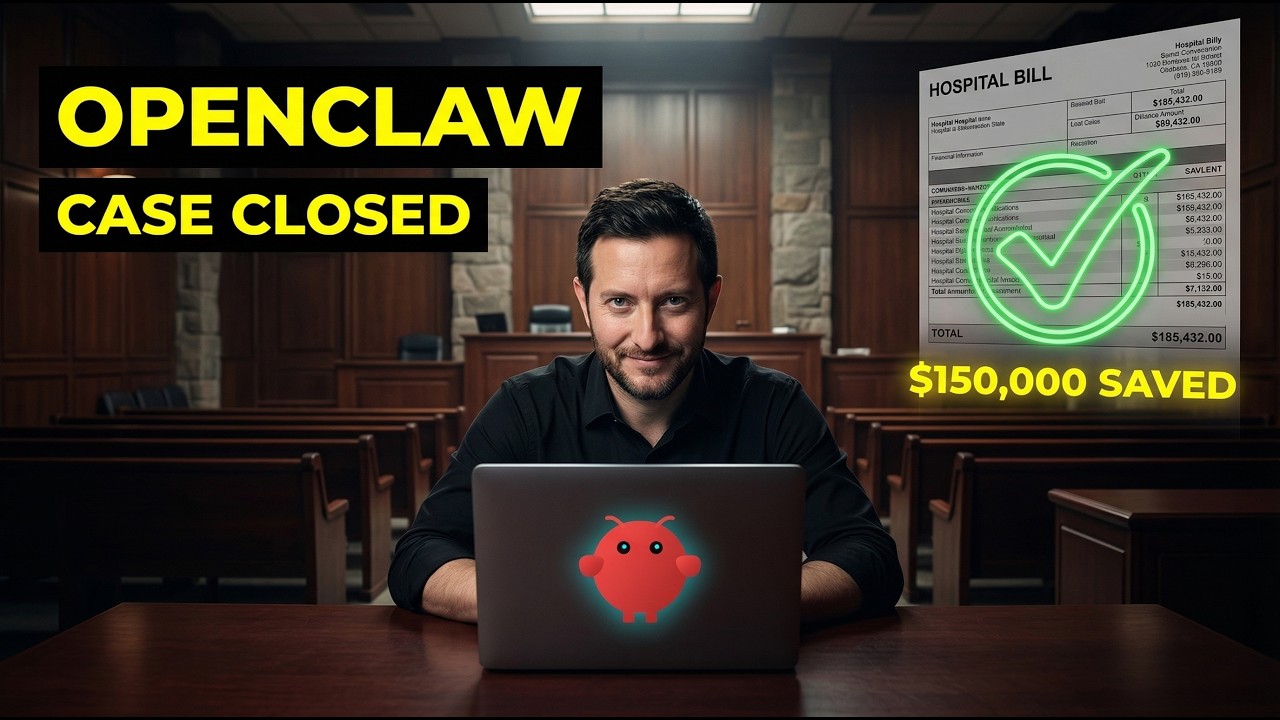
0:00This lady just used open claw to reduce thousands of dollars off of her medical bills and I want to dive deeper in this story because if you're going through something similar, you're going to want to leverage AI to do the same thing. So, a woman built her own personal healthcare agent using open claw and I'm not talking about some simple chatbot that answers basic health questions. We kind of all know where that road leads. I'm talking about an actual AI agent that manages her medical records, fights her hospital bills, and prepares for her doctor appointments. Basically tracks her entire health history across multiple hospitals. And all of this is running locally on her machine. So, I'm going to set the stage here. Her name is Eve. She's a technical user, healthcare advocate, and she's published this
0:45incredible deep dive on Substack about what she built. When I read this, I had to stop and read it again because the implications are pretty insane if you're experiencing something similar. So, the problem was that she was trying to solve is if you've ever dealt with a healthcare system in the US, you already know what I'm going to say. It's a nightmare. You go into the hospital, they have some of your records, you go to the other hospital, they have different records, probably a different name, and your insurance company has a totally different view of everything, and nobody is talking to each other. There is a distant relationship between insurance company and the hospital. Your doctor gets maybe 15 minutes with you and they're supposed to somehow synthesize years of medical history in that time. It doesn't work. We all know this doesn't work. I've experienced it.
1:30It gets worse than that. And you know, if you've ever tried to get your own medical records, you know that it's impossible. You log into one patient portal, you download a PDF, you log into another portal, download a different PDF, try to get a piece all together by yourself, good luck. That's what most of us are dealing with. Fragmented data spread across systems that don't talk to each other. Eve said something that really stuck with me. She said healthcare AI doesn't fail because the models aren't smart enough. It fails because all the data is locked behind systems that were designed for humans to click through, but not for AI agents access. You know, and if you think about it, patient portals, PDF downloads, QR codes, login screens, all of that is built for you to sit there and manually pull the information. But, an AI agent
2:16can't just log into your MyChart and start reading. So, what did this lady do? She built what she calls a personal you don't know what FHIR is, don't worry. It's not technical and I didn't know what it was either first. It's okay because it basically is the standard way that healthcare data gets structured and shared between systems. Hospitals use it, insurance companies use it. It's basically the language of the healthcare data system. And once you understand that this standard exists, you realize that your data is technically accessible, you just need the right tools to pull it down. She pulled her medical records from two different hospital systems using their patient access API. These APIs that
3:01hospitals are legally required to provide if you're in the 21st century under the Cures Act. So, basically this isn't like hacking or anything bad. It's they're supposed to provide it to you. You know, this isn't doing anything shady. She's accessing her own data through a legitimate channel that most people just don't know exists. And I didn't even know it existed. So, she pulled her pharmacy data, she pulled her insurance claims through a service called Flexpa, which uses something called Karen Alliance Standard that gives your coverage information and explanation of the benefits. She pulled the family data as well and scoped all of it separated so nothing gets mixed up. And she normalized all of it into one of her private FHIR servers running on her own machine. That's the key. This
3:48is not in some cloud. This is not on some company's server in the middle of nowhere. This is her data on her machine under her control. And what matters so much when we're talking about health information, sending sensitive medical records to some random API. Everything stays local. Real quick, before we keep going, if you're watching this and you want to actually build with some of these tools, not just watch videos about them, then you're going to want to check out our community down below, Shipping School. We have a full Claude code course, a full open claw course, and four live bootcamps every single week where we actually help you get set up from scratch. Like actually set this thing up, not just watch a tutorial and figure it out by yourself. And we also provide one-on-one coaching so you could
4:33book a call with me, we could share screens, and I can help you get Claude code or open claw running on your machine. That's it, no fluff. I built this community because watching YouTube's only gets you so far. We launched it just 3 days ago and we have over 55 members. You need people around you who are actually building, people who hold you accountable, and coaches who can help you when you get stuck. I'll put the link in the description down below. Get in now before the price goes up. Here's where open claw comes in. She connected her open claw agent to this FHIR server, but she didn't just give it the raw access. She's smart about that. She's smart about security. She built what she calls a guardrail proxy layer that sits between open claw and the FHIR server. So, every single
5:19request the AI makes to pass through this layer first. I'm going to explain what that guardrail layer actually does because it is brilliant. It automatically strips out the personal identifiers before the AI even sees them. So, it masks things like social security numbers, addresses, dates of birth. It keeps it immutable audit logs of everything the agent accesses so you can go back and see what data was touched and when. For anything clinical or financial, it requires human confirmation before taking any action. And it has tenant isolation. So, if you're managing family health data, each person's records stay completely separate. So, basically the agent can help her research a diagnosis, it can draft a message to her doctor, it could prepare an insurance appeal. This is
6:06going to change the entire medical history. This is one of the first use cases that blew my mind. And could you imagine this in the future on how healthcare is going to look in a year or two years? You know, it can't actually send anything or make changes without her saying yes. That's the key here. You know, and that's the human in the loop design that I've been preaching about on this channel. made a video about it yesterday. You basically let the AI do the research, the drafting, all the grunt work, and then you make the final call. Here's the results. This is where it gets real. She had a colonoscopy and her daughter never told her it was going to be billed as a diagnostic not instead of a routine check. So, if you don't know the difference, routine screenings are often fully covered by insurance
6:52especially after a certain age, but diagnostic procedures hit your deductible. That one word meant the thousand dollar bill that she was going to be hit with and would have to pay. If she waited just a few weeks until she was 45, it would have been free. Nobody told her this, not the doctor, not the billing department, not the insurance company. The system relies on you not knowing these things so they could make the money. And that's where her open claw agent stepped in. Her agent helped her understand the billing nuance by pulling the relevant insurance codes and comparing them. It drafted a dispute letter citing the specific policy provisions. It identified her leverage points including credit reporting thresholds and regulatory guidelines. It also helped her decide whether escalation was worth it or if it wasn't.
7:38That one use case alone saved her a thousand bucks, one interaction, one agent, and a thousand bucks back in her pocket. But, it goes way beyond the bill dispute. Her agent now prepares for every doctor appointment by pulling her relevant history and organizing it into a summary the doctor can actually use. It drafts the follow-up messages after the visits. It fills out all those endless medical forms that every office makes you fill out even though they already have your information. It writes the insurance appeals when claims get denied. It tracks trends in her lab results over time. If you just think about that, that is phenomenal if you just think about it like for blood work. You know, if it's looking at your blood work from 2024 and comparing it to 2026 and actually flagging changes in your health, the
8:25doctor might miss this. You know, they're looking at one snapshot in a 15-minute visit. This is going to help doctors be more accurate, especially if you're doing what she's doing. So, she said something that I absolutely love and I want you to really hear this. She said that this isn't about replacing doctors, even though I'm going to be replaced. Don't say anything. It's about giving every patient a team, a researcher who can look up the latest studies about your condition, an analyst who can spot trends in your lab results, an advocate who knows your insurance policy better than you do, an administrator who handles the paperwork, a billing specialist who catches the overcharges, and a translator between all these different healthcare systems that don't just talk to each other. They're all working for you, and they're all running on your own hardware. That's
9:12what open claw enables. If you're struggling to keep up with content, well, I'm about to save you about 40 days worth of work. I built something called Content Machine. It's 10 [music] AI agents that run on the open claw orchestration and they handle everything. Scripts, [music] thumbnails, X posts, blogs, outreach, clips, newsletters, all of it. So, I went from 1,000 subscribers to 4,000 subscribers on YouTube in 7 days using this exact system. Every single morning I wake up [music] and the content's already done. I spend maybe 15, 20 minutes reviewing and approving them and I move on with my day. [music] It works for any niche, fitness, finance, real estate, marketing, whatever you are building, and it is 100% completely customizable
9:59to your use case. [music] So, you get the mission control dashboard, all of the cron jobs, everything I've built over the last 40 days helping me gain more and more people to subscribe and join the community. So, you plug in your own thing and it molds it to you, it learns how you talk, and it writes so it doesn't sound like AI slop. $97 one time, it's not a subscription. I'll put the link down below and you'll thank me later. Now, let me connect this to what we're doing in my own setup. We now have 13 agents on the Mac Mini sitting right here. One of them, Atlas, the coordination agent, handles all my personal stuff, scheduling emails, memory, keeping track of everything, our whatnot resale business, and all of that. But, I haven't gone as deep as Eve on the healthcare side yet. I actually
10:44didn't even think of it. And now that I got the ball rolling and wondering, uh you know, we have four kids, my wife's going through health problems, this may be something that I could work on as a side project. You know, getting a bill that doesn't make any sense, nothing worse than that. Trying to figure out if I'm being overcharged, that sounds fun. Spending hours on the phone with your insurance company, they're going to put you on hold for 45 minutes just to transfer you to someone else to put you on hold again. I've been there. You probably have, too. And here's the thing about this use case that makes it different from the doctor use case we covered recently. That video was about a doctor replacing the virtual assistant with OpenClaw for their actual medical practice. Running it through Nima Claw for HIPAA compliance. That was the provider side. This This is the
11:31patient side. This is you and me taking control of our own health data and having an AI advocate working on our behalf. Two completely different angles on the same industry. This is a huge startup idea if someone wants to attack this. You're going to be the next millionaire in this OpenClaw saga because people will just be throwing money at you if you were to build this out. The security piece is really important, too, and I want to make sure we talk about that. Eve runs her agent on an isolated machine. You know, there's no API calls going to the cloud. She never installs random skills without red vetting them, neither should you. She never allows direct access to raw personal health information. Everything goes through that guardrail proxy, and she open-sourced that proxy on GitHub, so anyone can use it. I got it linked down below. That's pretty huge. So,
12:17she's not gatekeeping this, she's sharing the blueprint. All Like I said, you can find it in description. Anytime we do these AI videos, look in the description, the sources are there. So, I know some of you are thinking this sounds pretty complicated, and yeah, setting up a personal FHIR server isn't exactly a weekend project for most people. But, the thing is, the tools exist, the APIs exist, the legal frameworks that give you the right to access your own data are there. And as OpenClaw skills get better and more people share their setups like Eve is doing, this gets even easier for just your everyday user. Today, it's for technical users, in a year it's going to be for everyone. So, if you're going through a season right now where your healthcare bills are piling up, or you feel like you're losing track of your own health data across different
13:02providers, or you just want more control over your own medical information, this is what the future looks like. It's not science fiction, we're way past that. This is something that's happening now. It's someone's actual daily workflow running on a Mac Mini, and if you want to learn how to build setups like this, that's exactly what we're doing inside of our community. Over 109 members in just 11 days. All building with AI, some of them are building health-related tools, some are building business automation, some are building SaaS products, but the core skill is still the same. We're using a lot of these same tools to build projects. You learn how to connect AI agents to real data and real workflows, so they actually do something useful. Not just a chatbot, actually work for you. We do live builds six times a week, link in the
13:48description, check it out before the price goes up. So, a personal healthcare agent, that's pretty cool to me. And if it manages your own records, and it fights bills on your behalf, and prepares for your appointments coming up, and it tracks your health data over time, all this running locally on your own hardware, this is just a different reality from what I knew a couple years ago. All your data stays with you, no cloud, no third party, not your doctor forgetting, it's just you and your data and your agent. That's what's possible right now with OpenClaw. If you want to build something like that, check out the community, and if you haven't subscribed already, we release about four to six videos every day, and if you like staying on top of AI news and cool things people are building with OpenClaw, hit the notification bell for the next video drop. We'll see you in
14:33the next one. Bye-bye.
Build this with us, live
Shipping Skool is a free community with 4 live build sessions a week. Bring your idea.
Join Shipping Skool — Free




