Make Your AI Agents 10x Smarter With This Repo
By Beau Johnson · · 16 min · 15.4K views
Chapters
About this video
Transcript
Read the full transcript
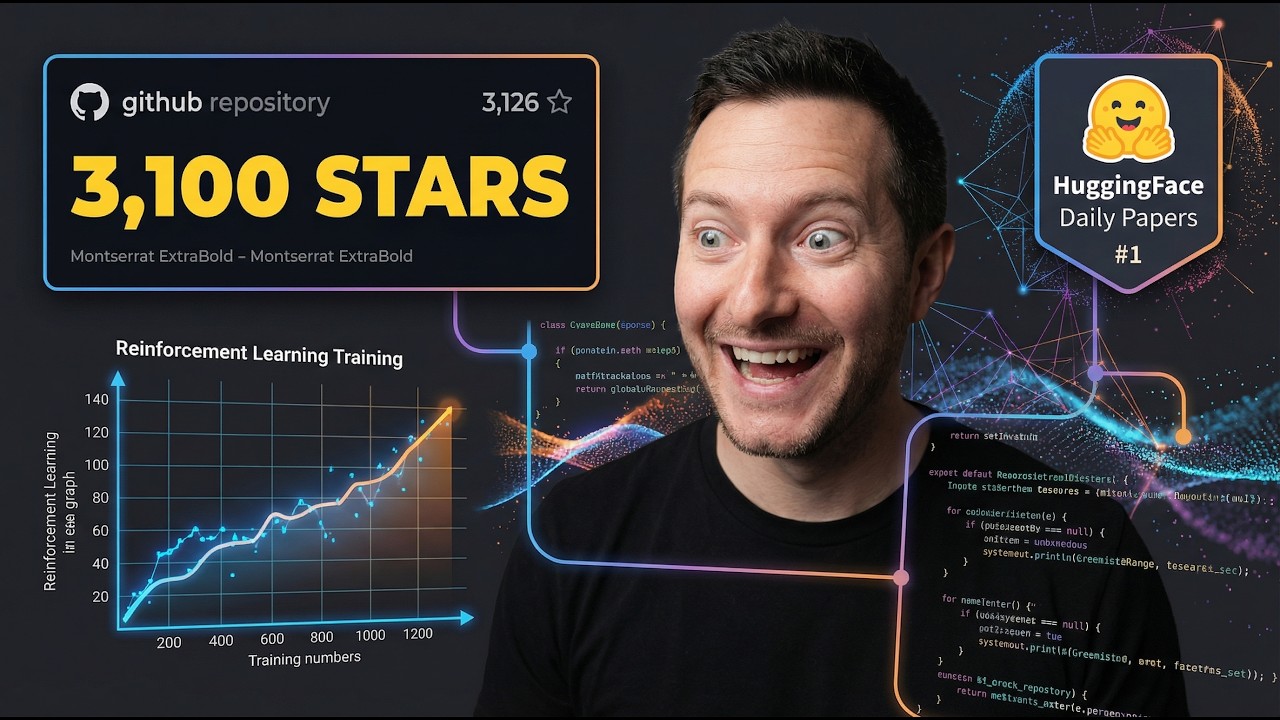
0:00This GitHub repo is going to make your AI agent a thousand times smarter. It has over 3,000 stars and it is going crazy on GitHub right now. I have it linked down below. You need to check it out. So, this repo basically makes your AI agent smarter in every single way and every time you talk to it, it gets progressively better. I'm not exaggerating. This has insane value right now and there's a reason why it has over 3,100 stars on GitHub and it just dropped a research paper that hit number one on Hugging Face daily. So, people are paying attention. And when you see what it actually does, you're going to understand why it has so much value in the AI agent space. So, the repo is called Meta Claw and what it
0:46does is crazy. Right now, if you're running Open Claw or Claude code or if you have any AI agent for that matter, every conversation you have with it basically starts fresh. So, you've got memory files. You've got your soul markdown file. You have your agent's markdown file. But, the actual model, the brain behind your agent doesn't actually learn anything from talking to you. It doesn't get better. It doesn't adapt. Every single time, it's the same base model just reading your notes. Meta Claw changes that entirely. So, what it does, you know, it without you having to do anything different, you're just conversing back and forth. You know, how it works is pretty interesting. Meta Claw sits as a proxy between you and
1:34your AI agent. So, when you talk to your Open Claw agent, for example, instead of going straight into the model and talking back and forth, your message goes through Meta Claw first. And Meta Claw does something really clever here. It looks at what you're about to ask. It checks the skill library for anything relevant to your question and it injects those skills and context into your prompt before it even hits the model. So, your agent is getting smarter inputs every single time without you lifting a finger. You just chat like normal. Meta Claw handles the rest. And that's just the beginning here. The real magic happens after the conversation ends. So, when your session wraps up, Meta Claw automatically summarizes what happened and turns those insights into new
2:19skills. So, if you spend 30 minutes debugging like a React component, for example, and you figured out like the pattern and workflow that got the bug fixed, Meta Claw will capture that. So, the next time you hit a similar problem, it already knows the solution. It already has that skill ready to inject. You don't have to remember it. You don't have to write it down. Meta Claw saw you solve the problem and it learned from it. So, here's where it gets more interesting is they have a thing called RL mode. RL stands for reinforcement learning. If you enable it, Meta Claw actually trains a lightweight model on top of your interactions using a Laura fine-tuning. So, not during your active sessions, though. It's smart about it. It only runs the training during what
3:04they call idle windows. So, when you're sleeping, when you're in a meeting or when you're away from your desk, it actually connects to your Google calendar to figure out when you're busy. So, your agent is literally getting smarter while you're doing other things. So, you think about that for a second. You go to bed, you wake up, hopefully, your agent is measurably better at helping you than it was yesterday. And that's kind of what we've been looking for in this AI agent space. We've been dealing a lot with persistent memory, amnesia and dementia with our AI agents. Finally, something that fixes this problem. So, it's not science fiction anymore. Someone's actually building this problem and it's blowing up right now. And that's what the repo does right now, today. You can install it right now, today and have this into your Open
3:49Claw setup or any AI agent workflow. So, I'm going to break down the architecture because I think this is important that you understand this. Like, what's actually happening under the hood. Real quick, before we keep going, if you're watching this and you want to actually build with some of these tools, not just watch videos about them, then you're going to want to check out our community down below, Shipping School. We have a full Claude code course, a full Open Claw course and four live bootcamps every single week where we actually help you get set up from scratch. Like, actually set this thing up, not just watch a tutorial and figure it out by yourself. And we also provide one-on-one coaching, so you can book a call with me. We can share screens and I can help you get Claude code or Open Claw running on your machine. That's it. No fluff. I
4:35built this community because watching YouTube's only gets you so far. We launched it just 3 days ago and we have over 55 members. You need people around you who are actually building, people who hold you accountable and coaches who can help you when you get stuck. I'll put the link in the description down below. Get in now before the price goes up. Meta Claw has three modes. So, the first one is called skills-only mode. This is the lightweight version. So, there's no GPU required, no fancy training setup, there's no extra cost. It just runs the proxy and it injects those skills at every turn and then it auto summarizes sessions into new skills when you're done. So, if you're just getting started with AI agents, this is where I'd recommend you begin first. It's basically plug and play. You
5:20install it and you start it up and then your agent your agent immediately starts building up a skill library from your conversations. The second mode is called RL mode. We talked about this earlier. It's the reinforcement learning training on top of skills. So, let's just say when Meta Claw collects enough interaction data, it batches it up and then it trains. So, you need to have a training back-end for this. They support three options right now. Tinker, which is their default cloud-based Laura training service built by Moonshot AI team. There's Mint, which is an alternative for people who want infrastructure. And then there's Weaver, which is the third option from Next AGI team. You pick up whatever which one works for your setup and you point it to
6:05whatever choice you want to do. It's up to you. The third model is called Mad Max mode and yes, that's actually what they called it. This is the third mode in in the whole Meta Claw repo. It didn't make this up. Mad Max, like what does this exactly mean? So, this is the full package, right? Skills plus RL plus a smart schedule that knows when to train. Connects to your Google calendar. It figures out when you're in meetings or sleeping or you're away, whatever. And then it runs a weight model and it runs updates during those windows. Basically, you you know, whenever you're out doing something, it just makes it so you're never interrupted. So, your agent stays fast and responsive when you need it. Then it levels up quietly in the background when you don't need it. That
6:50is the mode and this is the mode I'd eventually want to run on my own setup because you just set it and forget it. You won't know, you know, it knows when you're away, it knows when you're working. So, I like that. Now, here's what really caught my attention and why I even wanted to make this video is in their latest version 0.4, which literally came out just the last few days, they added something called contexture layer. So, this gives Meta Claw persistent cross-session memory. So, it remembers facts about you. You know, your preferences, your project history, your coding patterns and it automatically retrieves and injects that relevant context at every turn. So, even weeks later, your agent remembers what you told it 3 weeks ago and then uses that information to help you better today. So, it's like having a coworker who's actually paying attention and
7:35remembers everything. So, if you're running Open Claw, the setup is stupid simple right now. Like, this is so easy. I'm talking about three commands. You download the plugin file from their GitHub release page. You unzip it into your Open Claw extensions folder and then you enable it and you restart your gateway. That is it. Then you run the Meta Claw setup, which walks you through a little wizard where you pick up your agent type and your model provider and then you run Meta Claw start. You're done. Your agent is now on a path to getting smarter every single day. And it's Iron Claw, Pico Claw, Zero Claw, Nano Claw, Nemo Claw. This is crazy how many claws there are now. But, it also works with Hermes agent and that's amazing.
8:21For anyone that's getting going with this and you want to get your foot off to the right start, I'd recommend checking this out. Meta Claw knows exactly how to configure it itself. It's really easy to get going. It patches right into the configure files. It restarts the right services and it hooks everything up automatically. You just tell it which agent you're running during the setup and it handles the rest, which is pretty cool because it means you're not locked into any one ecosystem. I want to talk about why this matters for us builders because, you know, this isn't just a cool technical demo. I'm not just talking about something that's theoretical in the future. This is something that can impact us today in our workflows. This is a fundamental shift in how AI agents work. Right now, the way most people use AI agents is basically in a stateless,
9:06right? It's, you know, you've got your own context files. You've got your own memory system and that helps a lot. It really does. I run my own memory system with super memory, daily log files and long-term memory consolidation and it does make a huge difference compared to running it just out the box. But, the model itself, the actual intelligence behind your agent, it never changes. It never improves from your specific interactions. It's generic. It's the same model for everybody on the planet that's running the same model. Meta Claw makes your agent a bit more personal and over time, Meta Claw enhanced agent becomes genuinely different from everyone else's. It knows your coding patterns. It knows your debugging style. It knows the frameworks you use, the mistakes you commonly make, the solutions that work in your specific
9:52projects. It's literally like the difference between hiring a brand new contractor every single day versus having a teammate who's been working with you for months and actually knows how you think. I think about this a lot when I'm doing my own setup and figuring out what new agents to implement. You know, I run 13 AI agents on the Mac Mini right now. The Rizza handles the content pipeline for scripts and outlines. Inspector Deck handles all the things that have to do with X. Ghostface does all the scraping and intel gathering. Method Man chops up these long-form videos into shorts. And they all have memory files. They all have personality configurations. But the underlying model is the same for everyone using that model. Meta Claw would make each of those agents specifically tuned to how I work, what I need, and what produces the
10:38best results for my content. This is a massive upgrade. That's the difference between good generic outputs and great and amazing outputs. Now, I'm going to give you the research paper angle where, you know, where I think you get a lot of insights because this isn't just some random weekend project that someone threw up on GitHub. The team behind Meta Claw is from the University of California, Santa Cruz. Connected to a researcher named Shen Ze. They published a actual peer-reviewed research paper on ArXiv. So, paper number 2603.17187. If you want to look it up, go ahead. And it hit number one on Hugging Face daily papers when it dropped. That means the machine learning research community is taking this pretty seriously. This isn't
11:23hype. There's real science behind their approach. The paper shows that agents using Meta Claw measurably improve over time across multiple benchmarks. The skill injection alone makes responses more relevant and more accurate. And with RL enabled, the model weights actually shift to be better at your specific tasks. The compounding effect is real and it's documented. Day one, it's a little better. By day 30, you will notice a significant difference. By day 90, it's like having a completely different agent than what you started with that's fine-tuned for your use cases. That's the compounding effect and that's the whole point. It's like compound interest but for intelligence. If you're struggling to keep up with content, well, I'm about to save you about 40 days worth of work. I built
12:09[music] something called Content Machine. It's 10 AI agents that run on the Open Claw orchestration and they handle everything. Scripts, thumbnails, X posts, blogs, outreach, clips, newsletters, all of it. So, I went from 1,000 subscribers to 4,000 subscribers on YouTube in 7 days using this exact system. Every single morning, I wake up and the content's already done. I spend maybe 15, 20 minutes reviewing and approving them and I move on with my day. It works for [music] any niche. Fitness, finance, real estate, marketing, whatever you are building and it is 100% completely customizable to your use case. So, you get the mission control dashboard, all of the cron jobs,
12:55everything I've built over the last 40 days helping me gain more and more people to subscribe and join the community. So, you plug in your own thing and it molds it to you. It learns how you talk and it writes so it doesn't sound like AI slop. [music] $97 one-time. It's not a subscription. I'll put the link down below and you'll thank me later. So, who should be using this? Honestly, if you're running any AI agent for more than just casual conversations, you need to try this out. It's free, easy to install. Try the lightweight mode. It requires no GPU and at the worst case scenario, your agent gets slightly more context at each turn. Best case scenario, it starts building a skill library that makes every single interaction faster, more accurate over time. There's basically no downside to
13:40you trying it. So, if you're a developer or a builder or you're on the sidelines and you want to get started, you need to try this. You know, for like everyday real work like I do. The RL mode is where the real magic happens. It does take a bit more setup, but, you know, you need a training back-end. But the payoff is an agent that literally gets smarter from working with you. No other tool does this right now. Not Claude Code, not Codex, not any other commercial tool. They all give you the same generic model every time. Meta Claw is the only thing that I've seen that actually makes the agent learn from. And I'll be honest with you, I haven't personally deployed it, but I am going to try this out over the week and just let you know and keep you up to date how this works for me. I literally just found this repo today. You know, the dark architecture is sound. I had to
14:25make a video about it. The research paper is legit. You can check it out, link below. The team actually has academic credibility and the 3,100 stars in 3 weeks tells me the community agrees that this is something special. This is one of those repos that I think is going to become standard infrastructure for anyone who is serious about running AI agents. The link to the repo is down below as well. It's AimingLab/MetaClaw on GitHub. Go star it. Go try it out. Start with the skills only mode first. If you do set it up and, you know, it changes your workflow, come tell me about it. Leave it down below. Or maybe you were using it already. How do you like it? You know, I want to hear your experience. And speaking of building with AI agents, you know, if you want a community and people that will hold you accountable, we have exactly that with
15:11178 people joining our community in the last 18 days called Shipping School where we do now eight live boot camp calls a week helping you just take the next step in your AI journey. And, you know, people building real businesses. We're focusing on human-to-human interaction and helping people actually build businesses with AI agents. Real products, real agent setups. And we help each other through the hard stuff cuz it's not as easy as it sounds. So, I'll put the link to that down below and if you haven't subscribed to the channel already, please do because I release videos just like this about four to six times every single day. You know, GitHub repos, Open Claw use cases, and AI breaking news. I hope you guys have a blessed rest of the day and we'll see you in the next video. Bye-bye.
Build this with us, live
Shipping Skool is a free community with 4 live build sessions a week. Bring your idea.
Join Shipping Skool — Free




