OpenAI Users Down 563% In One Day
By Beau Johnson · · 17 min · 6.2K views
About this video
Transcript
Read the full transcript
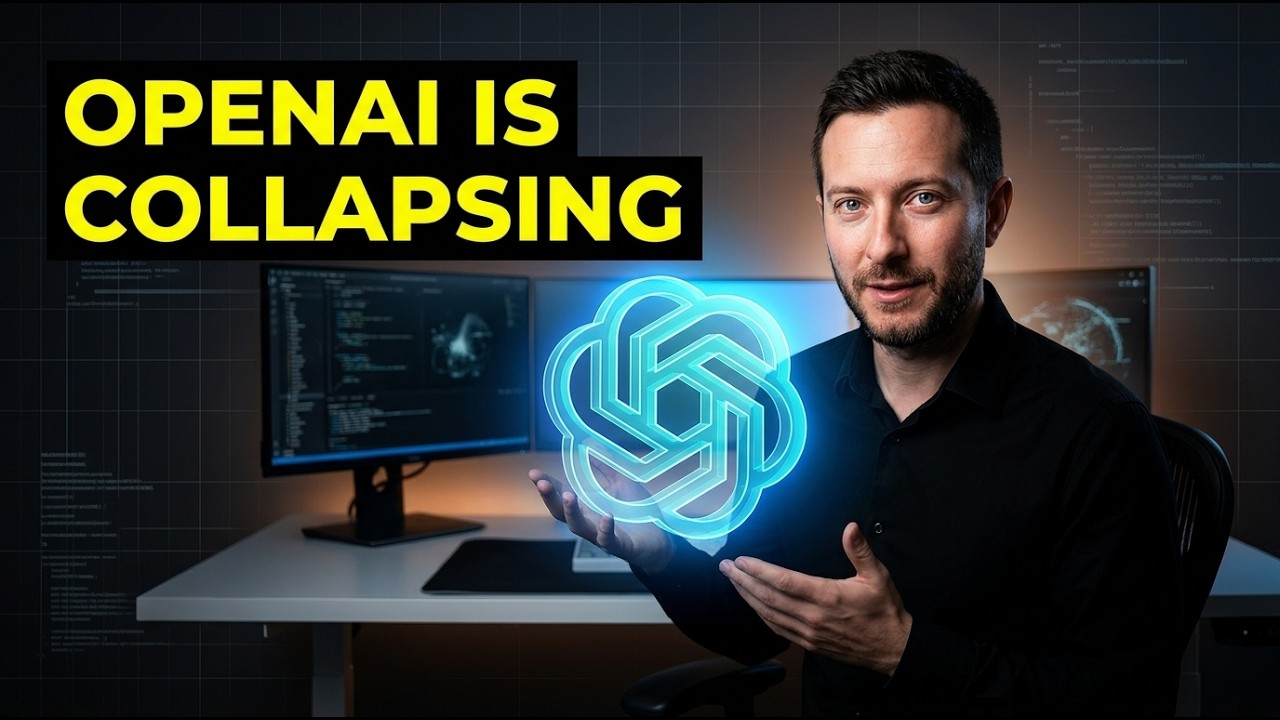
0:00Open AI just lost more users in one week than most AI companies gain in one year. We're talking a 563% spike in ChatGPT uninstalls, and it's because of one of the decisions that came down that has the entire AI industry choosing sides. So, let me break this down for you. Because of what's happening right now is way bigger than just Open AI having a bad week. This is about the future of artificial intelligence, who controls it, and whether the companies building these tools actually care about the promises they made when they started. Here's what happened. Open AI just signed a deal with the Pentagon to work on military AI applications. Now, if you're thinking,
0:45"Wait, didn't they say they wouldn't do military stuff?" You're absolutely right. And that's exactly why people are losing their minds right now. These companies are flipping and flopping back and forth about what they're going to decide to do. Originally, Anthropic had wanted to do that, but they had backed out, so Open AI had stepped in, signed the contract. So, let me back up a little bit on why this actually matters, because with the release of GPT-5.4 today, things are really kind of to stir up, and I feel like Open AI is getting a bit desperate. So, let me give you some context. When Open AI started, they were literally calling themselves a non-profit, which is why Elon Musk kind of left his involvement within Open AI, because he had been involved up until they went for-profit. So, they dedicated
1:31themselves to being a non-profit when they first started and ensuring artificial general intelligence benefits all of humanity. Sam Altman and his team were constantly talking about how they wanted to democratize AI, make sure it didn't get concentrated in the hands of powerful institutions, you know, all that good stuff. But, here's where it gets interesting. Over the past few years, we watched Open AI slowly but surely become exactly what they said they were trying to prevent. That's why you see Anthropic kind of filling those needs. So first they went from a non-profit to this weird hybrid structure, then they took billions from Microsoft, now they're working directly with the government and the military. And people are not having it. The uninstall numbers are absolutely insane.
2:16You've probably seen it pop up on Twitter here and there, but we're talking a 500% increase in people just deleting ChatGPT from their devices. And a lot of these are like prosumers, people that are just getting into it and they just lose interest. So that's not a protest, it's a mass exodus. They're paying these customers are paying and walking right away from the service they probably were using every single day. So there's other alternatives out there in this competitive space, but most people know ChatGPT. When you think of AI, they think of ChatGPT. So the thing that's really wild about all this in this whole situation is this not just the users who are upset, but other AI company CEOs are publicly calling out OpenAI's messaging
3:01and how they're kind of portraying themselves to the general public. So Dario Amodei, who runs Anthropic, you know, Claude's parent company, he straight up called OpenAI's explanations lies. And this is coming from a guy who's usually pretty diplomatic about the industry. So Amodei basically said that OpenAI's claims that are still committed to beneficial AI while simultaneously working on the military applications is contradictory at best. He didn't mince word about it either. This is the kind of public call out you almost never see in tech industry, especially between two major competitors. Right now, if you are just getting into AI and you're trying to figure out what LLM to use, I made
3:46the switch to Claude Claude everything about I'd say 6 months ago. That's using Claude Code in my workflow, using Claude projects to manage some of my businesses, and you know, I think everyone starts on chat GPT, but they eventually find something better and that fits their needs much, you know, more tailored to what they're trying to do. So, but you know, GPT 5.4 came out, people are blown away at the benchmarks. Still, I think that OpenAI is really trying to release as many models as they can as quickly as they can to kind of, you know, stir up the audience, you know, make sure that they still stay relevant because they had been at top of the market for so long. And now they're starting to get knocked off, especially with some of these open-source models,
4:32too, like Quinn, Kimmy K2, and MiniMax. So, Sam Altman is in full damage control. He's been doing interviews, posting on social media, trying to explain how this military contract is actually aligned with OpenAI's mission. But honestly, the more he talks, the worse it seems to get. His main argument is that they're not building weapons, they're building defensive AI systems. But here's the thing, that's the same argument every defense contractor has used for decades. We're not building offensive weapons, we're building defensive systems. It's a distinction without much of a difference when you're talking about AI that could be used for surveillance, targeting, and decision-making in military contexts. You already see it being used with what's going on in the Middle East, and
5:18the timing of this is just brutal for OpenAI. They're already dealing with massive competition from other AI companies. Anthropic is definitely catching up. They've got ongoing legal issues around training data, and now they're alienating their core user base with over ethics concerns. That's really interesting to me is how this is all playing out across the broader AI space because it's not just OpenAI making these kinds of deals. Google has Project Maven, Amazon has military contracts. Microsoft is deeply embedded in defense work, but Open AI is taking all the heat right now because they have positioned themselves so differently from the beginning, kind of going back on their word. They built their brand on being the good guys, the ones who were going to do AI
6:04right. And now that brand is completely falling apart in real time. And keep in mind, Open AI is not profitable. That's scary. So, it's kind of fascinating to watch from a business perspective, even though it's pretty depressing from an ethics standpoint. But here's where it gets even more complicated. While Open AI is dealing with this crisis, we're seeing other companies in the AI space make very different choices. Alibaba just announced that they're keeping their Qwen model open source after losing some key people from the Qwen team. Now, that's significant because Alibaba is massive Chinese tech company, and they're making a commitment to open source in AI development right as the US companies are moving toward closed and military-aligned approaches. That's not a coincidence. The Qwen announcement is
6:50particularly interesting because they lost some important team members recently, people who were instrumental in developing their AI models. Usually when that happens, companies really start to panic and lock things down, but they're trying to protect their intellectual property. But Alibaba went the complete opposite direction. They're saying, "We're keeping this open. We're keeping it accessible, and we're not going to restrict who can use it or how." That's a direct contrast to what we're seeing from Open AI right now. Those open source models are going to be running on local devices like your cell phone by the end of the year. I know it's a hot take, but that is my prediction, and we're moving in that direction because these open source models are getting better and better as each month goes by. So, this creates a
7:36really interesting dynamic in the global AI landscape. You've got US companies increasingly aligning with the government and military interests while Chinese companies are positioning themselves as champions of the open AI development. That's a complete reversal of what most people expect to happen. If you're building with AI right now, like me, this stuff actually matters a lot more than you think because these decisions are these companies that are making today are going to determine what tools are available to builders like us in the future. I'm seeing this play out in my own work right now. I've got a whole content creation pipeline running on different AI models and I'm constantly evaluating which ones have the best based on cost, the best output, the best capability, and reliability.
8:22And I'm also having to think about ethics of the companies behind these models. Like, are they stealing my data? Inside Shipping School, we talk about this stuff all the time. Our community members are building AI-powered applications. They're asking real questions about which models to integrate. Do you use GPT-4 even though OpenAI is working with the military? Do you switch to Claude because Anthropic seems to be a little bit more aligned with your values? Do you go open source to avoid all these issues altogether? So, that's why we have a community around this to help people that are looking from the outside in and help them take the step in the right direction to get their app built, to get their app shipped, and to actually get customers. These aren't just philosophical questions anymore. They are practical business decisions that affect which companies you're going to give your money to and which platforms
9:08you're building your business on. And also helping people build their other businesses. So, if you're running a, you know, agency, you're going to want to actually use models that are going to be consistent across all of your clients. So, here's the thing that really gets me about the whole situation. It's the whole AI industry is fracturing along these ethical lines when we need coordination the most. We're dealing with incredibly powerful technology that could transform society in ways we can't really even predict yet and that is scary. And instead of working together on safety and building beneficial deployment, everyone's picking sides. It feels like I'm Republican, I'm Democratic. Oh, I hate the 49ers. Oh, I love Seattle Seahawks. It's the same thing happening in the AI space. So,
9:53you've seen it all play out in real time, and I'm sure you've seen it on your social feed. You've got the move fast and break things, and then you got So, you got the move fast and break things camp, right? That's willing to work with whoever pays the most, including military contractors. Then you've got the AI safety-first camp that's trying to slow things down and think through the implications. And increasingly, you've got different countries taking complete different approaches to AI development and deployment. The problem is that AI development doesn't respect national borders or company boundaries. The models that get built in one place end up influencing the entire global ecosystem. So, when major players start making radically different choices about ethics and openness, it creates instability for everyone. For builders
10:40and entrepreneurs, this creates both challenges and opportunities. And there is a crazy amount of opportunity happening right now in this space. The challenge is that the landscape is becoming less predictable. You get a model that drops every week now. Image model, a video model that drops every week now, and it's crazy. It's hard to keep up. So, you might build your entire business on one AI platform only to have it completely change the direction or become unavailable for ethical reasons. But the opportunity is that fragmentation is creating space for new players and new approaches. So, this opens a door for a lot of new people coming in. When users are mass canceling subscriptions to the dominant platform, aka OpenAI, that's market opportunity for other alternatives. So, I'm already seeing this play out with Claude usage.
11:27It's spiking as people look for alternatives to ChatGPT. If you haven't tried Claude at all and you're new to this whole AI space, you need to get an account, sign up for free, and start using it. Open source models are also getting more attention. Smaller AI companies are positioning themselves as ethical alternatives to big players. And honestly, this might be exactly what the industry needs. Competition based on values, not just capabilities. Companies having to actually deliver their promises instead of just talking about responsible AI development. The big question is, what happens next? Because right now Open AI is in damage control, which is why they shipped that model today. 5.4 is out. It's great. But what's next? They're not backing down
12:12from the military contract. They're trying to have it both ways, keep the Pentagon money and keep their ethical reputation, but the user exodus suggests that's not going to work. Numbers don't lie. If the subscriber numbers keep dropping, Open AI is going to have to make a choice. Either they double down on the military relationship and accept that they're no longer the good guy AI company, or reverse the course and try to win back their user base. I mean, they're putting ads in your chat right now, in the CLI, in the chat, to help monetize, to help generate revenue. That's a scary sign. My guess is they're going to try to thread the needle, maybe limit the scope of military work, and add more restrictions to their contracts. But I don't think that's going to have be enough for users who
12:57feel like they've been completely betrayed by a company that they trusted. And that opens up a massive opportunity for competitors. Like Anthropic is already capitalizing on this with their constitutional AI approach. Open source projects are also getting more funding and attention. These new AI companies are launching with ethics first positioning. Which you need to have ethics, standards, morals, and values. It's scary what can happen in this AI space. You really need to have trust, which is very scary when you're handing over a lot of sensitive information to these LLMs. So, for those of us building in this space, I think it's a lesson to be aware of, and I think it's pretty clear, don't bet on one AI provider, especially the big ones that are making
13:42these kinds of controversial moves. Diversify your AI stack, keep an eye on open-source alternatives. Comment down below, what's your favorite open-source model? Mine is MiniMax. I use it in my dashboard, in my mission control, firing off cron jobs, being able to do kind of the smaller tasks, so it doesn't eat into my token usage on Claude. The AI industry is so new, and it's still incredibly young. If you look at the people that have used AI, it's less than 15% of the global population have even used AI. That's crazy. We're still early, y'all. So, the choices are being made right now about military partnerships, open-source development, and ethical guidelines are going to shape this technology forever. So, what's happening with OpenAI is just
14:27isn't just like a PR crisis. It's a defining moment for artificial intelligence. And the fact that users are voting with their feet, competitors are speaking out, and alternative approaches are gaining traction. This suggests that maybe the industry still has a chance to live up to its original promises. If you're building with AI or thinking about getting started, now is actually a great time to jump in, get your hands dirty, get your feet wet, break a few things when you launch your app. And that's how you learn, right? The market is more than it's been in years. It's more open. So, when I first started just 6 months ago, things have completely changed. Just the way that you speak with the LLM, the way that you, you know, have it write code for a feature that you want to ship, is
15:13completely different from when it was just 6 months ago. So, there are more and more options than ever, and users are actively looking for alternatives to the dominant players such as Open AI. We cover all this We cover all this stuff inside of Shipping School, where we're building a real AI applications. We're shipping every day. We have three classes a week, where we actually help you take the next step in your app or idea or help you monetize, help you get customers. The community is constantly sharing thoughts about which tools to use, which companies to trust, and how to build sustainable business in this rapidly changing landscape. I don't even know, if you go on Twitter, you might just get lost in the sauce. So, if you're new, focus on being around like-minded people that are actually shipping every day,
15:59and that's going to help you take the next step in your development into AI with whatever you're trying to do. Like, the bottom line is this AI industry is going through its growing pains, some more than other times, and it's pretty messy right now. But, out of this mess, we're going to get a lot more clarity. We're going to get better, more diverse, more of an ethical AI development approach, and that's good for everyone, builders, shippers, people that are just getting into it. We'll see in the next one, guys. Make sure you subscribe for more daily AI updates. Be blessed.
Build this with us, live
Shipping Skool is a free community with 4 live build sessions a week. Bring your idea.
Join Shipping Skool — Free